Allentown, Pennsylvania is one of the Lehigh Valley’s most active urban centers, with a diverse mix of residential neighborhoods, commercial corridors, and industrial zones. Like any city that experiences the full cycle of Pennsylvania’s seasons, Allentown’s paved surfaces endure significant stress from summer heat and UV exposure to the freeze-thaw cycles of winter that relentlessly work at cracks and joints in asphalt pavement. When surfaces reach the point where surface damage is visible but the underlying base remains structurally sound, Asphalt Resurfacing Allentown becomes the most practical and cost-effective solution.
What Is Asphalt Resurfacing?
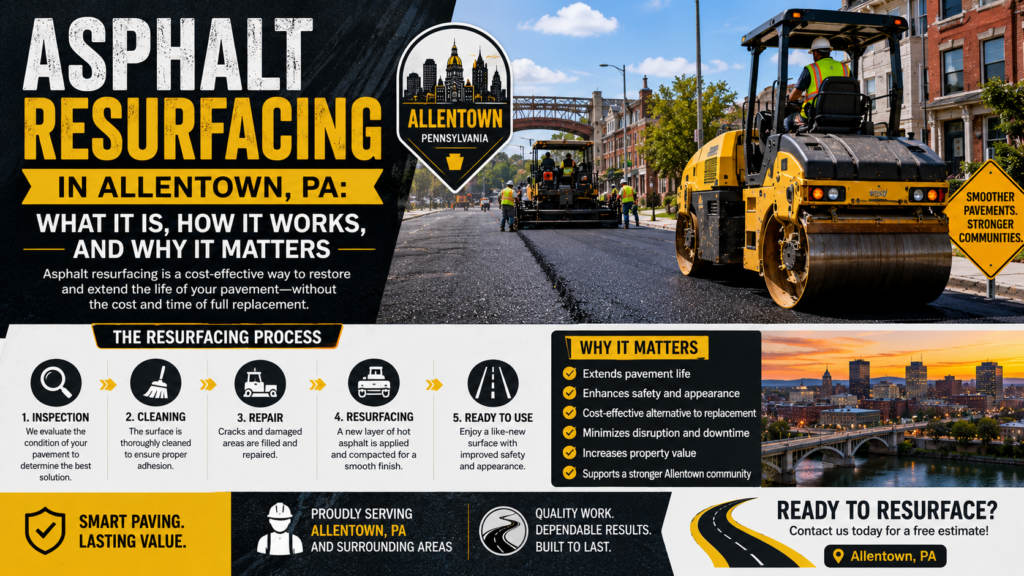
Asphalt resurfacing sometimes called an asphalt overlay is the process of applying a new layer of hot mix asphalt over an existing pavement surface. Rather than removing and replacing the entire pavement structure, resurfacing preserves the base while renewing the wearing surface. The result is a smooth, functional, and visually refreshed surface that extends the pavement’s useful life by an additional 8 to 15 years depending on traffic conditions and maintenance.
Resurfacing is not simply throwing a new layer on top of the old. It is a structured process involving surface preparation, crack repair, and application of a consistent, properly compacted asphalt overlay that bonds to the existing surface and creates a unified driving or parking surface.
The Asphalt Resurfacing Process Step by Step
A properly executed resurfacing project in Allentown typically follows these stages:
- Surface assessment: Contractors inspect the entire paved area for cracks, potholes, drainage issues, and areas of base failure that would disqualify the surface from resurfacing.
- Crack and pothole repair: Existing damage is repaired using appropriate fillers or cold-patch materials. In Allentown’s older neighborhoods, aged surfaces frequently require more extensive preparation.
- Milling (where applicable): In some projects, especially where curb height is a concern, the top layer of asphalt may be milled or ground down before the overlay is applied.
- Surface cleaning: The existing asphalt is thoroughly swept and blown clean to ensure proper bonding.
- Tack coat application: A thin layer of asphalt emulsion is sprayed on the existing surface to promote adhesion between old and new pavement.
- Overlay installation: Hot mix asphalt is spread by a paving machine and compacted to the specified depth, typically 1.5 to 2 inches for residential and light commercial applications.
- Final compaction and inspection: Rollers compact the fresh asphalt to achieve the design density, and the finished surface is inspected for uniformity and smoothness.
When Is Resurfacing the Right Choice?
Not every paved surface is a good candidate for resurfacing. The determining factor is the condition of the base. If the aggregate base beneath the surface is stable and well-draining, resurfacing can produce excellent results. If the base has experienced significant water damage, settling, or failure, full replacement is typically the better investment.
Common indicators that resurfacing is appropriate include:
- Surface cracking that has not penetrated into the base layer.
- Faded, oxidized, or raveling surface texture.
- Pavement that is 15 to 20 years old but structurally intact.
- Driveways or parking lots with recurring surface wear but consistent drainage.
Pennsylvania’s Climate and Its Effect on Asphalt
Allentown’s climate plays a central role in understanding why asphalt resurfacing is such a common need. The Lehigh Valley experiences significant temperature variation summers regularly see temperatures in the 80s and 90s, while winters bring freezing temperatures, snow, and ice. This freeze-thaw cycling is particularly damaging to asphalt pavement. Water infiltrates existing cracks, freezes and expands, widening those cracks and weakening the surrounding pavement. Over successive seasons, this process accelerates deterioration significantly.
When resurfacing is performed before the base has been compromised by this cycle, the property owner essentially resets the clock on the pavement’s life, protecting the investment already made in the base structure.
Residential vs. Commercial Resurfacing in Allentown
Both residential and commercial properties in Allentown benefit from asphalt resurfacing, though the scope and planning requirements differ. Residential driveway resurfacing is typically straightforward the area is relatively small, traffic can be redirected easily, and the project is usually completed in a single day.
Commercial parking lot resurfacing is more complex. It requires planning around business operating hours, coordinating with tenants or customers, addressing ADA accessibility requirements, and potentially restriping the lot after the overlay is applied. For shopping centers, apartment complexes, or industrial facilities in Allentown, a well-planned resurfacing project minimizes operational disruption while delivering a significantly improved surface.
How Resurfacing Compares to Other Maintenance Options
Property owners often weigh resurfacing against alternatives like sealcoating, crack filling, and full replacement. Each has its appropriate application:
- Sealcoating protects new or recently maintained asphalt from oxidation and moisture but does not add structural depth or correct surface damage.
- Crack filling addresses specific linear cracks but does not restore overall surface texture or extend pavement life in a meaningful structural sense.
- Resurfacing provides a genuine surface renewal and is the most impactful maintenance step short of full replacement.
- Full replacement is reserved for surfaces where base failure has occurred and resurfacing would simply be applying new material over a compromised structure.
Recognizing Early Signs That Resurfacing Is Needed
In Allentown’s older neighborhoods and established commercial districts, property owners should look for these indicators that a surface is approaching the resurfacing threshold:
- Widespread surface cracking, particularly alligator or fatigue cracking patterns.
- A faded gray appearance indicating significant binder oxidation.
- Rough, raveled texture where aggregate is becoming loose from the surface.
- Standing water indicating loss of surface drainage.
Addressing these signs through timely resurfacing prevents the more expensive outcome of complete base failure.
Conclusion
Asphalt resurfacing in Allentown is one of the most cost-effective infrastructure investments a property owner can make. By renewing the wearing surface before the base is compromised, resurfacing extends pavement life, improves safety, and restores visual appeal at a fraction of the cost of full replacement. Understanding the process, knowing when it is the right choice, and working with qualified local contractors who understand Lehigh Valley’s climate conditions are all keys to getting the best possible outcome from a resurfacing project.