Queue Management System in Saudi Arabia: 2026 Buyer Guide
A modern queue management system in Saudi Arabia does far more than issue paper tickets. It quietly shapes how customers feel about your bank branch, clinic, or government service counter from the moment they walk in. In 2026, with Vision 2030 pushing digital transformation across the Kingdom, waiting-line technology has become a frontline part of the customer experience, not a back-office afterthought.
This guide breaks down what these systems actually do, how to compare them, and where the return on investment really comes from. We draw on real deployments across Riyadh, Jeddah, and Dammam to keep the advice practical rather than theoretical.
Why a Queue Management System Matters in 2026
Saudi consumers have less patience for idle waiting than ever. Younger, mobile-first customers expect their time to be respected, and long lines translate directly into abandoned visits and negative reviews. A well-tuned queuing platform gives people a defined position, an estimated wait, and the freedom to sit, walk, or scan a QR code instead of standing.
For operators, the payoff is measurable. Branches that deploy structured queuing typically report shorter perceived wait times, smoother staff scheduling, and cleaner data on peak-hour demand. That data is gold when you are deciding how many counters to open on a busy Thursday afternoon.
Where these systems earn their keep
- Banking halls: segmenting premium, corporate, and retail customers into separate flows.
- Healthcare: routing patients to triage, pharmacy, and consultation without crowding.
- Government services: handling high-volume visa, licensing, and civil-affairs counters.
- Telecom stores: pairing walk-ins with the right specialist for SIM, billing, or device support.
Core Components of a Queue Management System
Before you compare vendors, it helps to understand the moving parts. Most enterprise deployments in the Kingdom combine four layers that work together in real time.
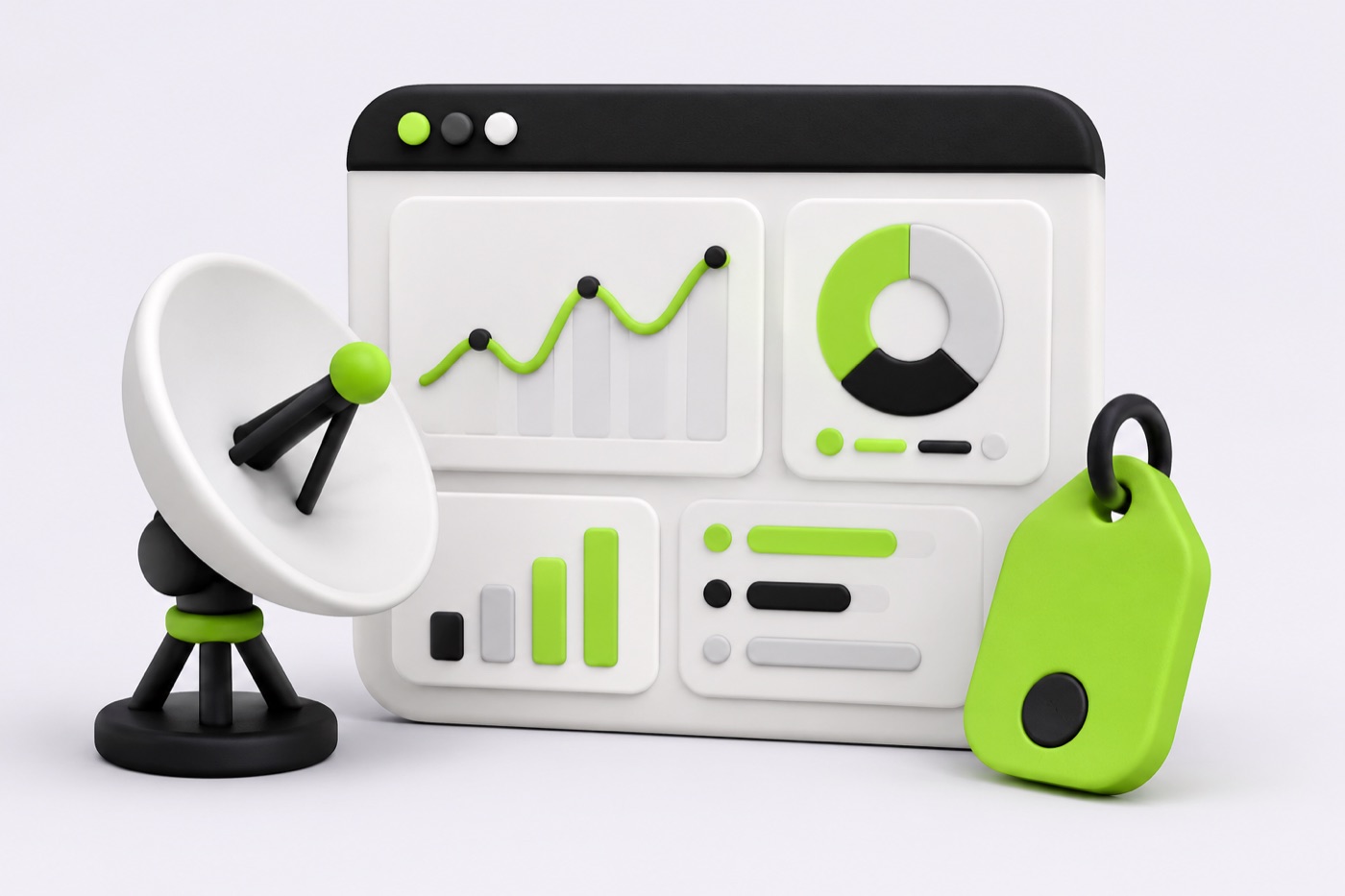
First is the ticketing layer, either a kiosk, a QR entry point, or a mobile app that lets a customer join the line remotely. Second is the display and calling layer, the screens and audio announcements that guide people to the right counter, ideally in both Arabic and English. Third is the counter and staff terminal, where agents call, transfer, or recall customers. Fourth is the analytics dashboard, which turns every interaction into service-level metrics.
When you evaluate a solution such as a full-featured queue management system in saudi arabia, confirm that all four layers are genuinely integrated rather than stitched together from separate products. Integration is what makes the reporting trustworthy.
How does a queue management system reduce wait times?
It reduces wait times by matching supply to demand in real time. The dashboard flags when a queue is building, so a supervisor can open an extra counter before customers grow frustrated. Smart routing also sends each visitor to a staff member trained for their specific need, which shortens the actual service transaction.
Comparing Queuing Approaches: A Quick Spec Table
Not every venue needs the same setup. The table below compares three common configurations we see across Saudi deployments in 2026.
| Feature | Basic Ticketing | Virtual / Mobile Queue | Enterprise Omnichannel |
|---|---|---|---|
| Entry method | Kiosk ticket | QR / app | Kiosk + app + web |
| Wait-time estimates | No | Yes | Yes, predictive |
| Arabic + English UI | Basic | Full | Full + RTL support |
| Analytics depth | Counts only | Service levels | Predictive + SLA alerts |
| Best for | Small clinics | Retail, telecom | Banks, government |
Beyond the Lobby: Drive-Thru and Hybrid Service
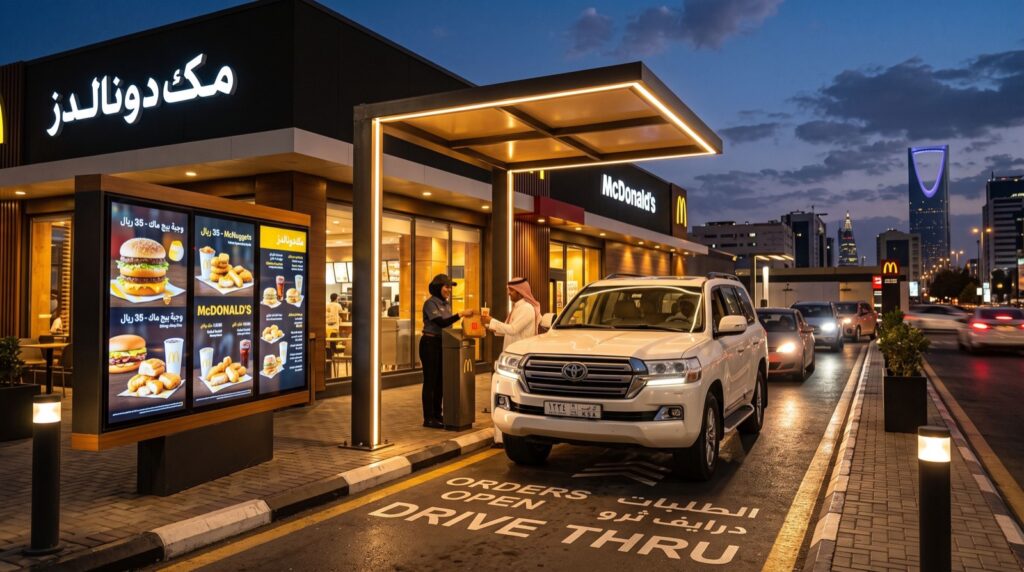
Queue technology increasingly extends outside the building. Fast-service brands and pharmacies across the Kingdom now blend indoor counters with lane-based service, and audio headset systems keep those lanes moving. Solutions like the professional HME Drive Thru in Riyadh show how order accuracy and speed-of-service metrics can be tracked with the same discipline as an indoor queue.
The lesson is that queuing and drive-thru are converging into one operations mindset: measure the wait, guide the customer, and coach the staff with real numbers. If you already run indoor queuing, adding lane analytics is a natural next step rather than a separate project.
Practical tip from the field
Pilot before you scale. In one Riyadh deployment, the operator ran a single-branch trial for six weeks, tuned the routing rules, then rolled the refined configuration out to eleven branches. That staged approach caught workflow quirks early and protected the wider budget. Working with dependable specialists who understand phased deployment is often what separates a smooth rollout from a stalled one.
Measuring the Return on Investment
ROI here is not abstract. Track three numbers before and after deployment: average wait time, customer no-show rate, and transactions completed per staff hour. Improvements in all three usually pay back the hardware and licensing within the first year for medium and large venues.
Regulators are watching service quality too. The Kingdom’s national digital-government efforts, described by the Saudi national portal, put customer-centric service at the heart of public-sector reform, which raises the bar for private operators as well.
- Baseline your current wait times for two typical weeks.
- Deploy in one representative location.
- Compare the same metrics after 30 days.
- Adjust routing rules, then expand.
Frequently Asked Questions
Is a queue management system worth it for a small branch?
Yes, if you regularly see even short lines. Small clinics and single-counter telecom shops benefit from clearer flow and basic analytics, and entry-level ticketing hardware keeps the cost modest while still capturing useful demand data.
Can customers join the queue before arriving?
Absolutely. Virtual and mobile queuing lets people take a ticket by scanning a QR code or using an app, then arrive close to their turn. This cuts crowding in the lobby and is especially popular in busy 2026 retail and banking settings.
Does the system support Arabic and right-to-left screens?
Reputable systems built for the Saudi market fully support Arabic, English, and right-to-left layouts on kiosks, screens, and mobile interfaces. Always confirm bilingual support during your evaluation, since it directly affects customer comfort.
How long does deployment usually take?
A single-site pilot often goes live within a few weeks, while a multi-branch enterprise rollout is typically staged over a few months. Phasing the deployment gives you time to refine routing rules before committing to the full network.
Conclusion
Choosing the right queue management system in Saudi Arabia is a decision about customer respect, staff productivity, and reliable data, not just hardware. Start with a focused pilot, insist on genuine integration across ticketing, displays, counters, and analytics, and let the numbers guide your expansion. In 2026, the venues that win loyalty are the ones that treat waiting as a problem worth solving. Ready to modernize your service floor? Talk to a specialist and map your first pilot today.